
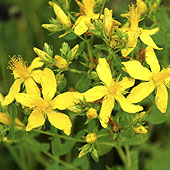
St. John's wort is a plant with yellow flowers. Its medicinal uses were first recorded in ancient Greece. The name St. John's wort apparently refers to John the Baptist, as the plant blooms around the time of the feast of St. John the Baptist in late June.
The flowering tops of St. John's wort are used to prepare teas, tablets, and capsules containing concentrated extracts. Liquid extracts and preparations for applying to the skin are also used.
The recommended adult dose to provide relief of restlessness or nervousness is 2 g to 12.6 g of dried herb top per day. You should not take more than 4.2 g of dried herb top in a single dose.
For other uses, the recommended adult dose of St. John’s wort is 600 mg to 1800 mg of dry extract (standardized to 3% to 6% of hyperforin and/or 0.12% to 0.28% hypericin) per day, with no more than 600 mg of extract in a single dose.
It may take at least 1 week to see the effects of St. John’s wort. Do not use it for more than 18 weeks without consulting your health care provider.
Your health care provider may have recommended this product for other conditions. Contact a health care provider if you have questions.
St. John's wort has been used for centuries to treat mental disorders and nerve pain.
St. John's wort has also been used as a sedative and a treatment for malaria, as well as a balm for wounds, burns, and insect bites.
Today, St. John's wort is used by some for depression, anxiety, or sleep disorders caused by mood disorders.
Your health care provider may have recommended this product for other conditions. Contact a health care provider if you have questions.
There is some evidence to suggest that St. John’s wort may be effective in treating mild or moderate depression. There is not enough evidence to support its use in treating other conditions.
St. John’s wort may cause increased sensitivity to sunlight and skin rash. Other side effects can include anxiety, diarrhea, difficulty sleeping, dizziness, dry mouth, gastrointestinal symptoms, fatigue, or headache. In rare situations, it may lead changes in appetite, joint or muscle stiffness, muscle spasms or pain, sexual dysfunction, tremors, developing suicidal thoughts, or abnormal mood changes.
Research shows that St. John's wort interacts with many medications in ways that interfere with their intended effects. Examples of medications that can be affected include:
St. John's wort is not a proven therapy for depression. If depression is not adequately treated, it can become severe. Anyone who may have depression should see a health care provider. There are effective proven therapies available.
Let your health care provider know before taking St. John’s wort if you:
Due to St. John’s wort effects on serotonin levels, it may interfere with surgical procedures. Stop taking St. John’s wort at least 2 weeks before any surgical procedures.
While you’re taking St. John’s wort, avoid prolonged exposure to UV light, such as through sunlight or UV light therapy.
Before taking any new medications, including natural health products, speak to your physician, pharmacist, or other health care provider. Tell your health care provider about any natural health products you may be taking.
All material copyright MediResource Inc. 1996 – 2020. Terms and conditions of use. The contents herein are for informational purposes only. Always seek the advice of your physician or other qualified health provider with any questions you may have regarding a medical condition.
 View Flyer
 Rx Refill
 Directions